The ForeFront

The Mahjong Moment: Turning a Popular Pastime into Club Engagement
October 2026
A seat at the table can become a stronger connection to your club.
Mahjong has a long history, but its recent popularity reflects a growing appetite for social activities that combine connection, entertainment, and friendly competition. For country clubs, this growing interest presents an opportunity. Mahjong is approachable, social, and adaptable to different skill levels, making it a natural fit for club programs.
A welcoming game-based program like Mahjong can create a new incentive for a member to visit the clubhouse and get more involved in club life. But the opportunity goes beyond hosting a single game night. With the right approach, clubs can turn Mahjong into a reliable addition to the club calendar that strengthens member connections and supports dining and other amenities all year round.
Riding the Mahjong Wave
Why Is Everyone Playing Mahjong?
At its core, Mahjong is a four-player tile game that combines strategy, pattern recognition, and a little luck. Players draw and discard tiles to build a winning hand of matching sets and pairs. Originating in China in the 19th century, several variations now exist around the world, each with its own rules and playing style.
It's social by design. While learning the rules takes practice, the social format is part of the appeal. Four players gather around a table, share conversation between turns, and enjoy a game that can be as much about the company as the competition.
It's accessible to different generations. Mahjong can appeal to longtime players and newcomers alike. Beginner sessions create an easy entry point, while more experienced players can enjoy open play and friendly competitions.
That combination of strategy and social connection helps explain why Mahjong continues to attract new players. Its resurgence is also part of a broader interest in in-person experiences, shared hobbies, and activities that bring people together outside their usual routines.
Why Clubs Should Get on Board
A successful membership experience isn't measured solely by attendance at major events or participation in golf and racquets. Clubs also have an opportunity to engage members who aren't currently taking advantage of everything their membership offers.
Enter Mahjong.
It appeals to members beyond traditional club activities. Not every member wants to attend a large social, participate in a golf tournament, or spend an afternoon on the courts. Some members are looking for something simpler: a casual opportunity to meet people, explore a new interest, and spend time at the club without committing to a large event or physically demanding activity.
It's easy to build into a recurring community. Once members find a group they enjoy playing with, weekly or monthly sessions can create a consistent reason to return to the club. Paired with lunch, afternoon tea, or cocktails, it becomes an experience, not just an activity.
It creates a reason to visit during slower periods. Weekday afternoons, winter months, and quieter stretches on the club calendar can offer opportunities for smaller gatherings. Mahjong can help clubs bring members into the clubhouse when other activities may be less appealing or in lower demand.
For club leaders, the opportunity is clear: Mahjong offers a relatively approachable way to broaden participation and create more touchpoints between members and the club.
How to Get the Most Member Engagement Out of Mahjong
New programming doesn’t always require a major renovation and significant investment. Start with an introductory session, add recurring open play, and expand into lessons or friendly tournaments as interest grows. The goal isn’t simply to host more events, it’s to create an activity members want to return to.
1. start with a welcoming, beginner-friendly session
Host a Mahjong 101 session for beginners, with instruction and time to practice. Make it clear that no prior experience is necessary.
Consider partnering with an experienced instructor or member volunteer. Keep the first session manageable, gather feedback, and use interest in the introductory event to plan future sessions.


2. Continue Offering different ways to participate
Not every member will want the same experience. Consider offering:
Beginner lessons for members who want to learn.
Open-play sessions for experienced players.
Recurring league night for regular participants.
Occasional themed events or friendly tournaments.
Mahjong can become even more appealing when paired with coffee, a lunch special, afternoon tea or a seasonal cocktail service. Different formats give members more opportunities to participate and help clubs understand which activities generate the most interest.
After the first session, share the next date while interest is fresh. If the club offers recurring sessions, make the schedule easy to find so members can plan ahead.
Schedule strategically. Think about when the club has room for additional activity. Weekday afternoons, slower dining periods, and seasonal lulls may offer natural opportunities. Choose times that suit the intended audience and avoid conflicts with other popular club programming.
3. Make registration & communication clear
Create a central hub for all things Mahjong on the member app.
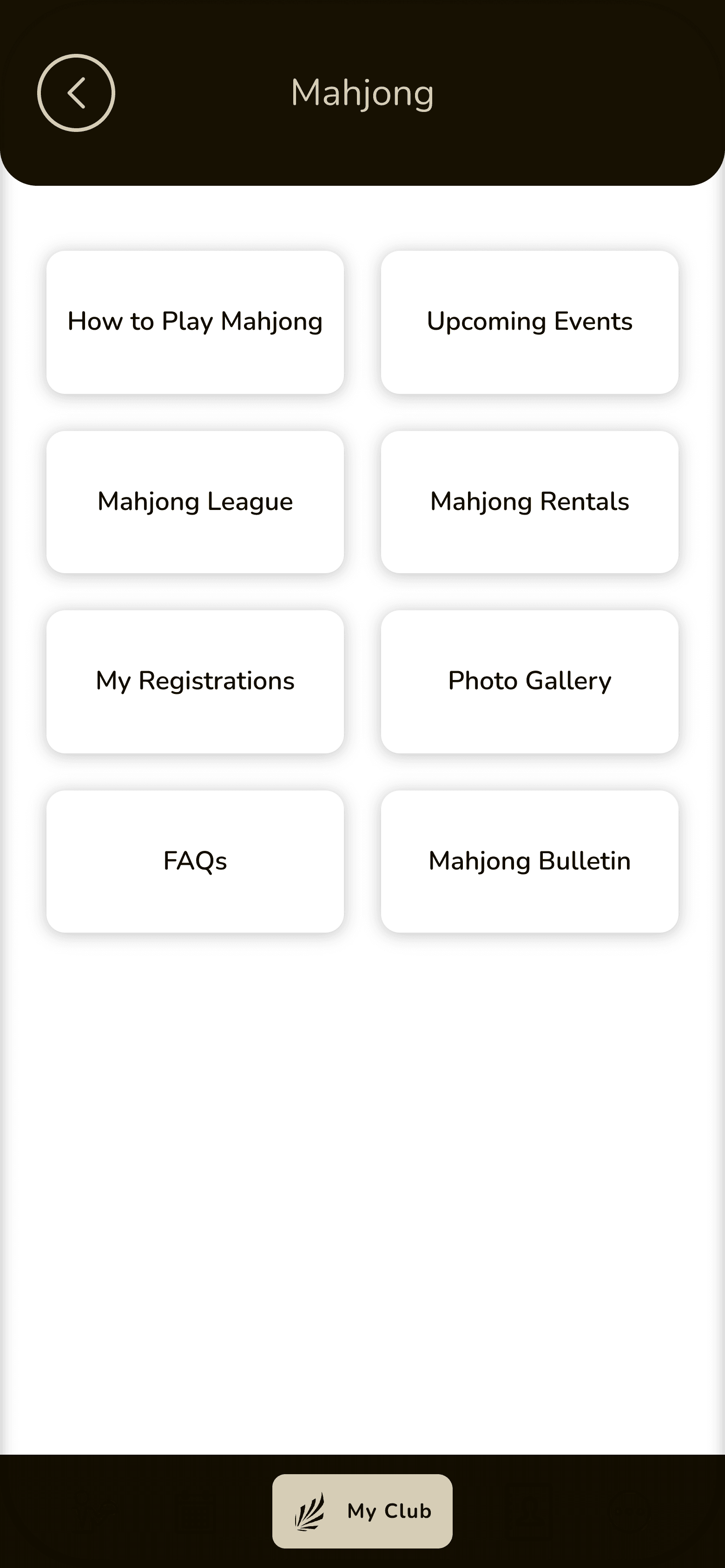
Avoid making members call the club or track down an email just to find out when the next session takes place. Publish clear event details, including the date, time, location, skill level, and registration requirements.
Include additional information like a PDF of the rules or an instruction video or a photo gallery collection from previous events.
If space or the number of Mahjong tables is limited, use registration and capacity limits where available. This helps organizers plan table assignments, staffing, and supplies before the event. If a session fills up, use a waitlist and communicate how members can register for the next available session.
Promote the activity more than once. A single announcement may not be enough to build momentum. Include Mahjong in the club calendar, feature it in relevant member communications, and send reminders as the event approaches.
4. Build a community around the activity
Keep members informed with targeted communications. Use push notifications and emails to announce new sessions, remind participants about upcoming events, and promote additional dates.
Adding a Member Group within ForeTees of participants allows communication to reach the intended audience without overwhelming the entire membership with repeated messages.
Give each communication a clear next step, such as registering for a beginner lesson or viewing the upcoming Mahjong schedule. Encourage participants to return and invite other interested members.

Utilize surveys and feedback forms through the ClubCentral App. Ask participants what they'd like to see next. Would they prefer more beginner lessons, regular open play, or a monthly social? Feedback helps clubs build programming around actual member interest rather than assumptions.
Measure participation and adjust. Track registrations, attendance, repeat participation, and member feedback. If sessions fill quickly, consider adding another time slot. If introductory sessions attract interest but repeat attendance is low, ask participants what would make it easier or more enjoyable to return.
These small adjustments can help transform a popular idea into a sustainable part of the club's programming.
A Small Activity Can Make a Lasting Difference
Mahjong may be having a moment, but the opportunity is bigger than any one game. Book clubs, card games, crafting and and other interest-based gatherings can create similar opportunities for members to connect. With ForeTees, your team can put existing technology to work making activities easier to discover and organize.
Ready to help more members discover what's happening at your club? Explore how ForeTees can help your team promote activities, manage registration, and create more opportunities for members to connect.


We Value Your Feedback!
At ForeTees, we are always seeking to improve and deliver the best possible experience for you, even when it comes to our monthly newsletter.
Thank you in advance for taking the time to complete this feedback survey.

Stay up to date with all-things ForeTees with our monthly e-newsletter.