The ForeFront

The State of AI in the Private Club Business: A Responsible Path Forward
May 2026
Slowing down the rapid AI movement and breaking down what it means for you.
There's a lot of noise right now about artificial intelligence. Every software vendor, every conference agenda, and every trade publication seems to be racing to plant a flag. And if you're a general manager, a golf professional, a food and beverage director, or any other club leader, you may have felt the pressure to figure out what your "AI strategy" is before you've even had a chance to understand what AI actually does, and more importantly, what it doesn't. We'd like to slow that conversation down.
At ForeTees, we believe AI is only as strong as the data and the people behind it. That belief shapes everything about how we're approaching this moment, not as a race to ship features, but as a responsibility to help club professionals navigate a genuinely complex shift with clarity and confidence. This is our attempt to do that honestly.
A Practical Guide to How AI Works
Before a club can make good decisions about AI, it helps to understand that "AI" is not one thing. It's really three distinct layers of intelligence, and they work very differently from one another.
Automation:
It Executes For You
Automation runs on predefined rules. If tee sheet utilization drops below 50% during peak season, flag it. If a tee time cancellation comes in two hours before the cutoff, send an alert to the pro shop . If a member's dining tab goes unacknowledged for 48 hours, send a follow-up. Same trigger, same action, every time.
This is valuable, reliable, and already in use at most clubs in some form. It's best suited for stable, repetitive tasks where the rules don't change much.
Machine Learning:
It Makes Predictions
This is where software begins to find patterns in historical data, not to tell you what to do, but to tell you what is likely to happen. For example, let's say your dining room has historically seen a 22% drop in covers every third week of August, right around the time school starts. Machine learning surfaces that pattern before it catches your team off guard and allows management to make an informed staffing decision.
Machine learning is a forecasting tool, not a decision-making tool. That distinction matters enormously.
Reasoning:
It Gives Recomendations
This layer adapts, reasons, and makes contextual recommendations. It can tell you that guest demand is up 18%, and why — junior member usage is surging, weekend afternoons are underutilized, and based on similar patterns at comparable clubs, incentivizing off-peak play is likely to move the needle. Then it tells you how.
This is what most people mean today when they say "AI." This layer is best suited for complex decisions under genuine uncertainty. It doesn't wait for you to ask the right question. It surfaces the answer before you knew to look for it.
Different problems require different layers. And critically, these layers build on each other. You simply cannot get practical reasoning without a solid foundation of reliable data and good automation underneath it.
But here's what makes AI different from any tool your club has used before: it doesn't stay static. The more your club uses it, the more it learns. Tee time patterns, member preferences, seasonal behavior. Every data point sharpens the next.
Where AI Does Well & Where to Be Careful
Let's be direct about the practical landscape, because club professionals deserve a straight answer. These are real, immediate, low-risk applications that any club department can start using today.
However, the old Russian proverb that President Reagan was fond of applies well here: "Trust but verify." Use AI as a powerful thinking partner, but let's keep our hands on the wheel…
AI handles certain things exceptionally well right now.
✔
Draft member communications in a fraction of the time
✔
Summarize board-ready updates from internal notes
✔
Analyze operational data and surface patterns your team might miss
✔
Build staffing schedules and draft SOPs
✔
Help you frame a difficult staff conversation, and turn complaint feedback into structured improvement insights
But it cannot do it all by itself.
❌.
Replace member relationships or professional judgment
❌.
Guarantee accuracy, every output needs human review before it goes anywhere
❌.
Know your club's specific history, culture, or membership dynamics, at least not yet
❌.
It should never handle confidential member data without clear governance policies in place
AI Is a Journey, Not a Purchase
The pressure to be "AI-ready" has led many organizations to implement tools before they have defined the problem those tools are supposed to solve. When evaluating any AI solution, whether from ForeTees or anyone else, work through these questions before you commit.
The Questions Every Club Should Be Asking
What specific decision does this improve?
AI should be tied to a real outcome, not a general aspiration toward being more modern. If you can't name the decision, you're not ready for the tool and that's fine.
Is this based on patterns, not just rules?
If a vendor is calling automation "AI," that's worth probing. True AI adapts. Rules don't.
Can a human override it when needed?
Your staff's judgment has to remain sovereign. Any system that doesn't preserve human override isn't a tool. It's a liability.
How will you measure success?
Define your metrics and goals before you launch, not after. Time returned to your team and quality of decisions made are the two metrics that matter most.
Successful AI implementation looks a lot like delivering excellent member service. It requires ongoing attention, refinement, and a willingness to learn from what isn't working.
Clubs that treat AI as a one-time deployment will be disappointed. The clubs that treat it as an evolving capability, one that gets better as the data improves and the team grows more fluent with it, will see compounding returns over time.
This requires ownership. Someone on your leadership team needs to be accountable for the daily application and team success.
How ForeTees is Approaching AI
We want to be transparent about where we are and where we're going.

"We are in the foundational stages of AI development. That's not a weakness. It's the right place to be when you believe, as we do, that the quality of the data underneath the intelligence matters more than the speed of the feature release.
Our focus is on practical operational areas where AI can help teams work more efficiently, including communication assistance, operational reporting, and identifying patterns across club activity and engagement data."
~Khushbu Patel, Software Development Manager
OUR ROADMAP
Our starting point is the data layer: pulling together the tee sheet utilization, dining and event activity, member engagement patterns, operational issues, and financial summaries that ForeTees already captures in a structured, standardized, and reliable way. That foundation is what makes everything else possible.
From there, we are building toward an intelligence layer that translates your club's data into clear, actionable language for leadership. The goal is to give general managers a daily brief that surfaces what matters, flags what's at risk, and supports faster, better decisions without replacing the judgment that makes great clubs, great.
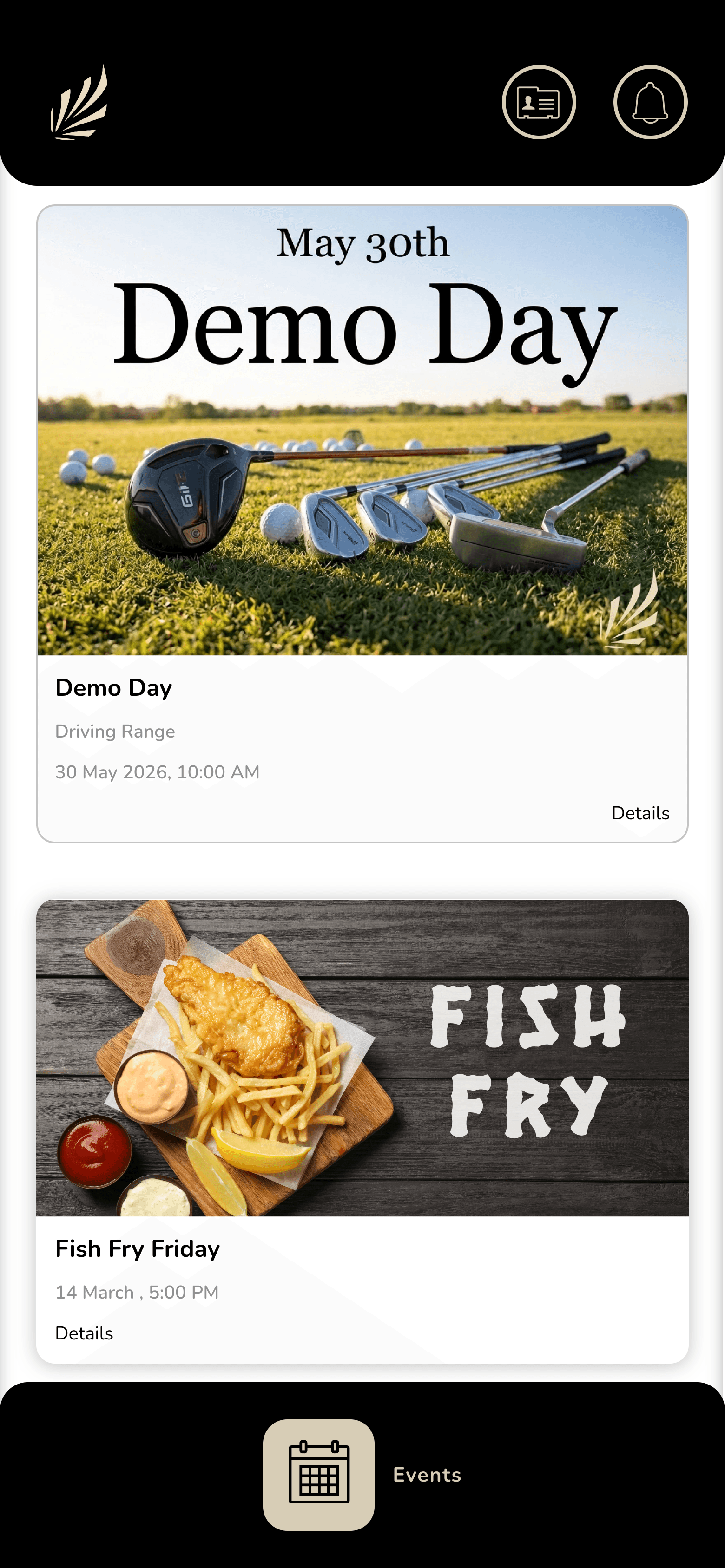
Our near-term focus areas include financial summary tools that spot trends and provide analysis from existing reports, AI-assisted marketing tools that help club communications teams move faster and more creatively, and on-demand member communication drafting that stays warm, human, and on-brand.

Longer-term, we see AI transforming three areas in particular for private clubs.
The first is proactive member retention, where patterns in engagement data can surface at-risk members before they disengage.
The second is evidence-based operational planning, where demand forecasting helps leadership make better staffing and capacity decisions.
The third is personalization at scale, where individual member preferences and life circumstances inform everything from tee time recommendations to dining suggestions.
None of this happens overnight. And none of it works without the human layer. The general managers, golf professionals, food and beverage directors, and membership teams know their members in ways no algorithm ever will.
What We Believe
AI won't replace great operators. It will make great operators faster!
We believe technology should simplify your operation, not complicate it. Our software — POS, accounting, reservations, websites, and apps — is built specifically for the world of private clubs, designed to work together seamlessly so your team can have more time for the relationships, traditions, and moments of truth that make your club and member experience special.
The clubs that thrive in the next decade will have great people, smart tools, and a technology partner who understands the difference between the two.
"Having spent nearly 50 years in the software industry, I’ve witnessed my share of technological leaps, but none quite like this. AI stands as the most transformative innovation I’ve encountered since the birth of the World Wide Web, and its impact on our daily lives will reach far beyond what any of us can currently imagine.

The pace of change can feel staggering, even disorienting. Yet for those in leadership roles at private clubs, my message is this: embrace the opportunity, but resist the urge to rush. The clubs that will benefit most from AI won’t necessarily be the first to adopt it, they’ll be the ones that adopt it thoughtfully.
Like the Web before it, AI isn’t a passing trend. You have time to get it right.”
~Robert Parise, ForeTees President and Founder
We are building toward that future deliberately, responsibly, and with your input at every step.
If you would like to talk with us more about AI or want to explore your options, please give us a call. We’d love to chat!
ForeTees is a trusted technology partner serving private clubs across the country. This piece draws from presentations delivered at the Pittsburgh CMAA chapter on AI and responsible technology adoption in the club business.


We Value Your Feedback!
At ForeTees, we are always seeking to improve and deliver the best possible experience for you, even when it comes to our monthly newsletter.
Thank you in advance for taking the time to complete this feedback survey.
Stay up to date with all-things ForeTees with our monthly e-newsletter.